Home Blog Portfolio Papers Gallery About Contact
SpaceGaps

Writing  ·  Research  ·  Ideas

Blog

Essays, ideas, and writing.

Coming to the End of Oneself – Part III: A Biblical Matrix of Desire, Loss, and Transformation
Christianity

Coming to the End of Oneself – Part III: A Biblical Matrix of Desire, Loss, and Transformation

The matrix is not destiny. People move across quadrants through choice, circumstance, and divine intervention. Solomon could have moved from seeking to end had he truly rested in God. Nebuchadnezzar was forced downward, yet restored. The crowds had the opportunity to move from seeking bread to receiving eternal bread but many turned away. Job and Paul stand as beacons of what it means to be at peace with God in deprivation.

· 10 min read

Coming to the End of Oneself Part II: It's just the beginning
Christianity

Coming to the End of Oneself Part II: It's just the beginning

At first glance, their contexts could not be more different: a prince of India, an emperor of Maurya, a bishop of North Africa, a Russian novelist, and a medieval Italian friar. Yet when we look closely, the pattern emerges: all were born into privilege or acquired greatness at an early age. They had tasted wealth, power, and influence, and yet found them bitter on the tongue of the soul.

· 11 min read

Coming to the End of Oneself Part I: Five Figures in History
Christianity

Coming to the End of Oneself Part I: Five Figures in History

Five figures—Buddha, Ashoka, Augustine, Tolstoy, and Francis—represent diverse cultures and traditions, yet converge on a common truth: human striving has limits. Whether in the pursuit of enlightenment, empire, pleasure, genius, or honor, each reached a breaking point where ambition proved vain. Transformation arose only when self was surrendered.

· 9 min read

Discovery, Invention, Creation, and Growth: A Theological Inquiry into Human and Divine Agency
Christianity

Discovery, Invention, Creation, and Growth: A Theological Inquiry into Human and Divine Agency

When properly distinguished, discovery, invention, creation, and growth reveal a hierarchy of agency. Humanity discovers what already exists, invents new configurations from the given, but cannot create life or generate growth. These latter two belong to God alone, who in His sovereign wisdom brought forth life from nothing and ordained that life should grow, reproduce, and flourish.

· 8 min read

The Measure of a Superpower Today
World

The Measure of a Superpower Today

Superpower status is not a title bestowed by geography or sheer population. It is not the natural inheritance of a vast army or a swollen economy. It is the product of excellence—in thought, in industry, in culture, in contribution to the world.

· 7 min read

Judgment vs. Discernment: A Theological Distinction
Christianity

Judgment vs. Discernment: A Theological Distinction

The concepts of judgment and discernment often surface interchangeably in both secular and Christian language. Yet, a careful theological and philosophical distinction between the two shows that they are not equivalent acts. Both involve the delineation of right and wrong, but their scope, authority, and application are profoundly different.

· 4 min read

Reading Between the Lines: Bob Dylan, Runaways, and the Bible
Christianity

Reading Between the Lines: Bob Dylan, Runaways, and the Bible

The text doesn’t spell out all of this, but the detail invites us to infer. The very act of Paul writing in his own hand makes Galatians impossible to take lightly. It’s not prophetic imagery. It’s not allegory. It is direct, urgent, and must be received straight to the heart, as-is.

· 4 min read

The Sino-Soviet Split: When Two Giants Diverged on the Socialist Path
World

The Sino-Soviet Split: When Two Giants Diverged on the Socialist Path

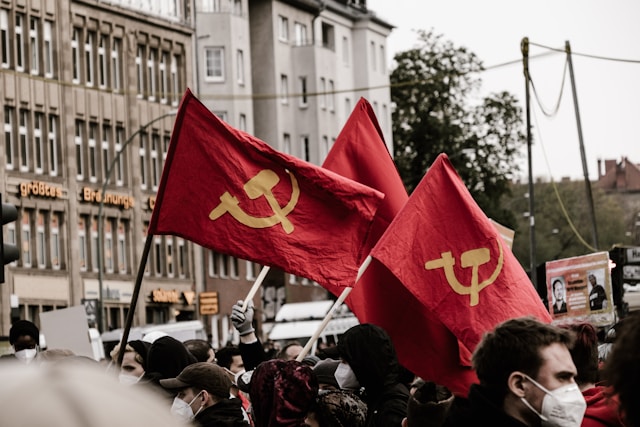
The Sino-Soviet split teaches us that ideological alignment does not guarantee long-term alliance. Political philosophy, while important, often takes a backseat to historical experience, leadership style, and national interest. The split was not a failure of socialism, but rather a demonstration of its plurality and flexibility, reflecting the diverse contexts in which it was practiced.

· 6 min read