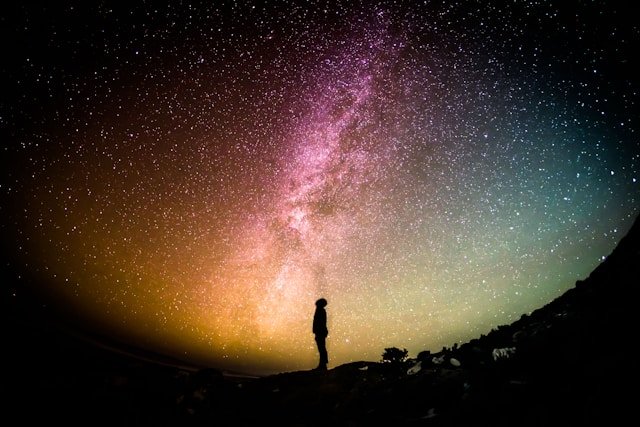

Who can say there is no God?
Who does not know that there is a God?
Everyone knows there is one. We may say that we do not know Him, that we have not found Him, that we do not understand Him, or that we have not sought Him—but to say that there is no God is to deny the obvious. The proof of God’s existence is everywhere, most clearly within us and within other human beings.
Scripture says that it is only a fool who says there is no God. Recently, someone claimed that God is humanity’s finest creation—that we invented Him out of a need for security. In a sense, this is true. We have created many gods and, in doing so, refused to look toward the one true God who was already there: to provide for us and to care for us. We carved gods out of wood and stone, bowed before them, and worshiped them.
If our need for security and sanity is the driving force behind creating gods, then we have succeeded—and ultimately deceived ourselves. Why create what already exists? Why manufacture when what we were meant to do was seek?
When we are asked to understand, we often demand proof. Yet I say this emphatically and with conviction: no one has come face to face with God and said, “I do not like what I see.” No one has come to know God and said, “I wish I had never known Him.” From the dawn of time, this has been true.
The joy, peace, and overwhelming awe that accompany the knowledge of God must be experienced to be understood. Once this is known—once it is understood that God exists—there is no argument strong enough to sway us away. There is no proof that can disprove Him.
Seeking God
When I began to seek God, I was ashamed to do it publicly. I did not want anyone to know. I would drive an hour to the ocean, sit alone on the beach, and read the Bible.
It was extraordinary.
I watched the ocean roar and crash upon the shore again and again, and I became aware of how powerless I was before it. I looked down at the sand and realized that no matter how hard I tried, I could not create or destroy even a single grain. I looked at the rocks and thought of how water once gushed from them when none could be found.
Then I looked at a promise God had given me:
“I am with you and will watch over you wherever you go… I will not leave you until I have done what I have promised you.”
Those words were true then, and they are true today. God will never leave me. What He has planned for my life will come to pass—not because of me, but in spite of me.
Every day is a testimony that God exists and that what He has promised, He is fully able to accomplish. God knew me before I knew Him. He waited for the moment I would seek Him, turn around, and look for Him—and when I did, He revealed Himself.
God Reveals Himself to Those Who Seek
Scripture says that God looks down from heaven to see if there are any who understand Him, any who seek Him. He does not roam the heavens and the earth offering proof of His existence. Instead, He reveals Himself to those who seek Him and desire to understand Him.
God seeks relationship—so that we may walk together.
God is love. And this raises a question: where does our capacity to love come from?
If we are merely organisms that emerged from the sea, why do we form relationships? Why do we experience emotion—love, hurt, envy, prejudice, justice? Why are we so deeply dependent on one another?
When a baby is born, even before it can speak, touch meaningfully, or reason, it knows how to love. Infants naturally love their parents. No proof is requested. No proof is given. No proof is required. Love precedes understanding.
Love is not a learned behavior. It dwells within us before we know it exists, and it manifests itself throughout our lives. This love can come only from God.
Proof, Evolution, and the Limits of Argument
The theory of evolution may or may not be true, but it neither proves nor disproves God. Disproving evolution does not prove God’s existence, and proving it does not negate Him.
If one wants theories to explain how the earth came from nothing, there are countless intellectual paths to explore. One can spend a lifetime pursuing them. God is not found there.
If one wants to kick a rock and wait for God to cry out, one can wait for eternity—it will never happen.
We are called instead to “taste and see that the Lord is good.” It is the goodness of God that leads us to Him. God does not want to be proven through argument or evidence. That may seem counterintuitive, but it is true.
I am not here to argue God into existence. I am here only to point out that there is a God—one who must be sought and understood. Your willingness to seek will bear fruit, not my reasoning.
The Evidence All Around Us
The proof of God’s existence is everywhere. Human existence itself testifies to God’s character.
-
The way we live, love, and die
-
The way we reproduce, grow, mature, and teach the next generation
-
The way we seek Him, doubt Him, deny Him, and even blaspheme Him
All of it points to God.
Even denial is evidence. Without an innate sense that God already exists, there would be no need to deny Him at all. God knows this. He accepts it.
Not everyone accepts God as He is—just as He accepts us as we are. That is where strife begins. If we all did, there would be one God, not millions.
Conclusion
It is not God’s responsibility to prove His existence to us. It is ours to seek and understand Him. We all know—deep down—that we need Him far more than He needs us.
The task before us is to find the true God and recognize that humankind is God’s finest creation, not the other way around.
References
Psalms 14:1–2
Romans 1:20
Originally Written: Apr 01, 2009 1:12:58 am