
Summary
This paper examines Formula 1's abandonment of MGU-H exhaust heat recovery technology, analyzing the mechanical, financial, and expertise challenges that led to its removal. Despite F1's retreat, the paper proposes redirected research pathways including simplified thermoelectric systems, heavy-duty vehicle applications, advanced materials development, and AI-driven optimization to make waste heat recovery economically viable for real-world applications.
Synopsis
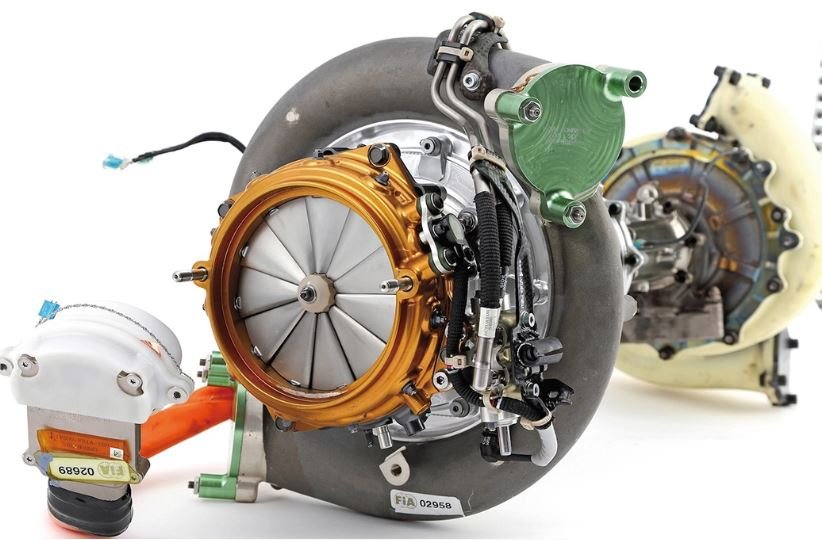
The 2026 Formula 1 regulation changes mark a significant technological retreat: the removal of the MGU-H (Motor Generator Unit – Heat), an sophisticated exhaust energy recovery system that has defined the hybrid era since 2014. While the MGU-H successfully recovered waste heat from exhaust gases and eliminated turbo lag, it proved too complex, expensive, and irrelevant to road car applications to justify continuation. This paper examines why this promising technology failed to achieve broader adoption and, more importantly, proposes viable pathways for researchers to salvage and redirect the substantial knowledge gained.
Part 1 establishes the F1 context, explaining that the MGU-H’s removal stems from its extreme development costs (tens of millions annually per team), manufacturing complexity, and the automotive industry’s pivot toward battery electric vehicles. The consequence—a return of turbo lag—represents an accepted performance compromise in exchange for cost reduction and improved commercial relevance.
Part 2 systematically enumerates the multifaceted challenges that doomed MGU-H adoption. Mechanically, the system demands exotic materials capable of withstanding 900°C+ exhaust temperatures while spinning at 100,000+ rpm, creating severe reliability and packaging constraints. Financially, the cost-benefit analysis fails for mass-market vehicles: consumers won’t pay premium prices for modest fuel savings when simpler electrification alternatives exist. The talent challenge is equally critical—MGU-H requires rare interdisciplinary expertise spanning thermodynamics, electrical engineering, and materials science, with institutional knowledge now at risk as F1 teams disband specialist groups. The road relevance gap compounds these issues: consumer expectations for 150,000+ mile reliability and accessible maintenance don’t align with racing-derived complexity.
Part 3 presents the paper’s core contribution: practical research directions that learn from F1’s expensive lessons while pursuing economically viable heat recovery solutions. The paper proposes near-term pivots toward simplified solid-state thermoelectric generators (TEGs) using advanced materials like skutterudites, and Organic Rankine Cycle systems suited to steady-state operations in trucking and marine applications where packaging constraints are relaxed.
Medium-term strategies focus on technology transfer to heavy-duty commercial vehicles, where continuous high-load operation, larger packaging envelopes, and substantial fuel cost savings justify more complex systems. The paper advocates for retargeting F1 knowledge toward electric turbocharging (e-turbo) solutions that eliminate lag without full MGU-H complexity, and toward battery thermal management in EVs—a critical application where motorsport-derived thermal expertise remains highly relevant.
Long-term fundamental research directions include next-generation high-temperature electronics (SiC and GaN power devices enabling 300°C+ operation), novel concepts like thermophotovoltaic systems for direct thermal-to-electrical conversion, and AI-driven optimization using machine learning to manage complex multi-variable heat recovery systems in real-time.
The paper’s central thesis challenges researchers to shift focus from maximum efficiency to economic viability. Rather than pursuing the most sophisticated solution, the path forward demands modularization, standardization, and cost reduction. Critical recommendations include archiving F1’s MGU-H knowledge before expertise disperses, redirecting investment toward applications with clearer commercialization paths, and recognizing that thermal management expertise applies equally to emerging technologies like battery systems and hydrogen fuel cells. The paper concludes that while F1’s specific MGU-H implementation failed, the fundamental challenge of waste heat recovery remains vital for transitional powertrains and specific high-value applications where internal combustion engines will persist for decades.
Access full paper and download in Pdf..here