
The letter to Philemon stands as one of the most misunderstood texts in Paul’s corpus, frequently wielded as evidence of Christianity’s complicity with the institution of slavery. Critics point to Paul’s apparent return of a runaway slave to his master as proof that the apostle condoned, or worse, actively participated in perpetuating human bondage. This superficial reading, however, fundamentally misapprehends the revolutionary nature of what Paul was actually doing. The encounter between Paul, Onesimus, and Philemon represents not an endorsement of slavery, but rather a profound meditation on freedom, choice, and the transformation of relationships under the gospel. To understand this properly requires setting aside modern assumptions and examining what Paul was actually proposing in this remarkable correspondence.
The Proposition of Freedom
At the heart of Paul’s letter lies a radical theological claim: Onesimus might have been Philemon’s slave according to Roman law and custom, but it is God who gives true freedom. This distinction between legal status and spiritual reality forms the foundation of Paul’s entire approach. Paul does not waste ink arguing about the legitimacy of Roman property law or the social structures of the empire. Instead, he operates from a completely different framework—one in which God’s liberation of the human soul takes precedence over all earthly arrangements. When Paul writes to Philemon, he is not writing master to master about property; he is writing believer to believer about a brother in Christ. The entire letter pulses with this subversive energy. Onesimus has encountered the gospel through Paul, and that encounter has fundamentally altered his status before God. Whatever legal categories the Roman world might impose, Onesimus now stands as a free man in the most important sense—free from sin, free from death, free to choose his destiny under God.
This theological freedom was not mere abstraction in Paul’s thought. It carried immediate and practical implications for how believers were to relate to one another. The freedom God grants cannot be confined to some spiritual realm divorced from daily life. It necessarily transforms relationships, expectations, and social interactions. Paul understood that once Onesimus had been liberated by God, no earthly master could truly claim ownership over him in any ultimate sense.
The Name and the Transformation
The significance of the name “Onesimus” deserves careful attention. The name means “useful” or “profitable” in Greek, and it is highly likely that Paul gave this young man a new name because he found him genuinely useful in his ministry. In the ancient world, naming carried profound significance—it spoke to identity, purpose, and belonging. If Paul indeed renamed this young man, he was participating in a pattern familiar throughout scripture, where God or God’s representatives rename people at crucial turning points in their lives. Abram becomes Abraham, Jacob becomes Israel, Simon becomes Peter—and perhaps a nameless or differently named young man becomes Onesimus.
This naming represents more than mere practicality. Paul makes a wordplay on the name in his letter, noting that Onesimus was once “useless” to Philemon but now has become “useful” both to Philemon and to Paul himself. The transformation in usefulness correlates directly with the transformation in spiritual status. As a slave, Onesimus may have been legally useful but spiritually lost. As a convert, he becomes truly useful—not in the degrading sense of being property put to service, but in the dignified sense of being a person choosing to serve God and others.
The Freedom to Choose
Here we arrive at the most crucial and most overlooked aspect of the entire incident. As a free man in God’s eyes, Onesimus possessed the freedom to choose his own destiny, and he chose to remain faithful to his earthly master. He chose to return to Philemon’s household and continue serving, not as a bonded slave compelled by law and the threat of violence, but as a free man making a free choice. This distinction is everything. The entire moral character of the relationship shifts when service becomes voluntary rather than coerced. Onesimus’s decision to return represents the ultimate expression of freedom—the freedom to choose one’s obligations, to honor one’s relationships, to commit oneself to service not because one must, but because one wills it.
Why would Onesimus make such a choice? Most likely because Philemon had helped him in a time of need, had provided safety and security in his household during uncertain times. The ancient world was brutal for the unattached and unprotected. A person without patron, family, or household faced dangers we can scarcely imagine today. Philemon’s household represented not just economic survival but physical safety, social standing, and human connection. Onesimus’s choice to return suggests that his relationship with Philemon, whatever its legal framework, held genuine positive meaning for him.
Paul’s letter transforms what could have been a straightforward case of fugitive recovery into something entirely different. He sends Onesimus back, but he sends him back as a “beloved brother,” with a strong hint that Philemon should receive him as he would receive Paul himself. The power dynamics are being fundamentally renegotiated. Philemon is being asked—or perhaps told—to see his slave as his equal, his brother, his partner in the gospel. The legal relationship of master and slave cannot survive this transformation intact, even if its external form temporarily persists.
Paul’s Acquiescence and the Celebration of Choice
Paul acquiesces to Onesimus’s wishes—to be free and to be of service—and this acquiescence is crucial for understanding the apostle’s position. He is not forcing Onesimus to return against his will. He is not hunting down a fugitive to restore property to its rightful owner. He is honoring the decision of a free man who has chosen his path. This is not condoning slavery. This is celebrating the decision that Onesimus made as a free person. Instead of continuing to run, risking capture, punishment, and permanent bondage, Onesimus chose, with Paul’s help and blessing, to return with dignity, as a brother, to the household he knew.
The genius of Paul’s approach lies in his refusal to make the legal status of slavery the primary issue. He could have demanded that Philemon immediately free Onesimus as a condition of Christian fellowship. Such a demand might have satisfied modern sensibilities, but it would have robbed Onesimus of his agency in the matter. By allowing Onesimus to choose and by crafting a letter that fundamentally transforms the relationship without explicitly mandating manumission, Paul created space for both men to work out their new reality as brothers in Christ. The freedom to choose one’s service, the freedom to maintain relationships on new terms, the freedom to negotiate one’s place in the world as a person of dignity—these freedoms matter more in Paul’s framework than simple legal status.
The Paradox of Human Nature
Curiously, this incident also reveals something profound about human nature and our relationship with freedom. We choose safety over uncertainty almost every time. This is not entirely a failure or weakness—it reflects the reality of human vulnerability and our need for security, connection, and belonging. Onesimus could have disappeared into the vastness of the Roman Empire, seeking freedom in anonymity and independence. But independence without community, without safety, without connection—is this really freedom? Or is it just another form of bondage to fear, isolation, and precariousness?
It helps considerably that in this situation, safety comes in the form of Christian community. Onesimus is not simply choosing continued servitude out of fear or lack of alternatives. He is choosing to remain within a community that has embraced him as a brother, where the gospel promises transformation of relationships even within existing social structures. The Christian household, even one that includes slaves, is being reconstituted as a fellowship of equals before God.
This paradox of choosing security over radical uncertainty reflects the broader human condition. We are creatures who need both freedom and belonging, both independence and connection. Pure autonomy, disconnected from all relationships and obligations, is not the biblical vision of freedom. Instead, freedom in the biblical sense involves the capacity to choose our loves, our loyalties, our commitments—and then to live faithfully within those chosen commitments.
A Great Ending, Twisted by Cynics
All in all, this is a great ending to the story. A young man encounters the gospel through an imprisoned apostle, experiences spiritual liberation, chooses to return to his former master as a free man and brother, and Paul writes a letter that fundamentally transforms the nature of their relationship. The seeds of slavery’s eventual abolition are planted here, not in revolutionary rhetoric, but in the quiet insistence that master and slave are brothers, that both owe their ultimate allegiance to God rather than to empire or custom, that relationships must be transformed by the gospel even when social structures cannot immediately be dismantled.
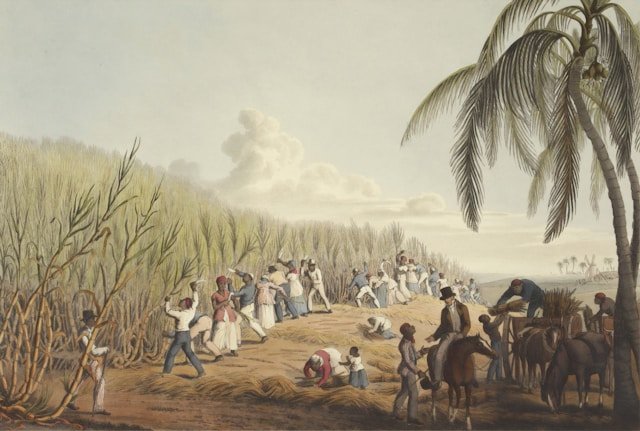
Of course, this beautiful narrative has been deliberately distorted by those seeking to discredit God and the faith by discrediting Paul. Critics ignore the revolutionary content of Paul’s letter—the way it subverts power, elevates the slave, and demands transformation—focusing instead on the superficial fact that Onesimus returned to Philemon’s household. They read the text through the lens of nineteenth-century American chattel slavery, projecting backwards a system far more totalizing and dehumanizing than anything in the Roman world. They demand that Paul speak in modern abolitionist terms rather than in the theological and social vocabulary of his own time. In doing so, they reveal more about their own agenda than about Paul’s actual position.
Conclusion
Perhaps the claim that Onesimus received a new name from Paul is a stretch—we cannot know with absolute certainty. But it fits perfectly with everything else we see in this extraordinary exchange. In just a few verses, Paul weaves together freedom, choice, reason, love, belonging, and loyalty into a tapestry that reveals the gospel’s transformative power. Here is a man set free by God, choosing to return not out of compulsion but out of love and loyalty. Here is reason guiding choice, and choice creating authentic relationship. Here is belonging redefined not by legal status but by brotherhood in Christ. Here is service elevated from bondage to gift. Those who read this letter and see only Paul’s endorsement of slavery have missed everything that matters. They have mistaken the husk for the kernel, the form for the substance. What Paul gives us in Philemon is nothing less than a vision of human freedom operating at its highest level—not freedom from all obligation, but freedom to choose our obligations wisely, to serve from love rather than fear, to transform unjust relationships from within by the power of the gospel.