Summary
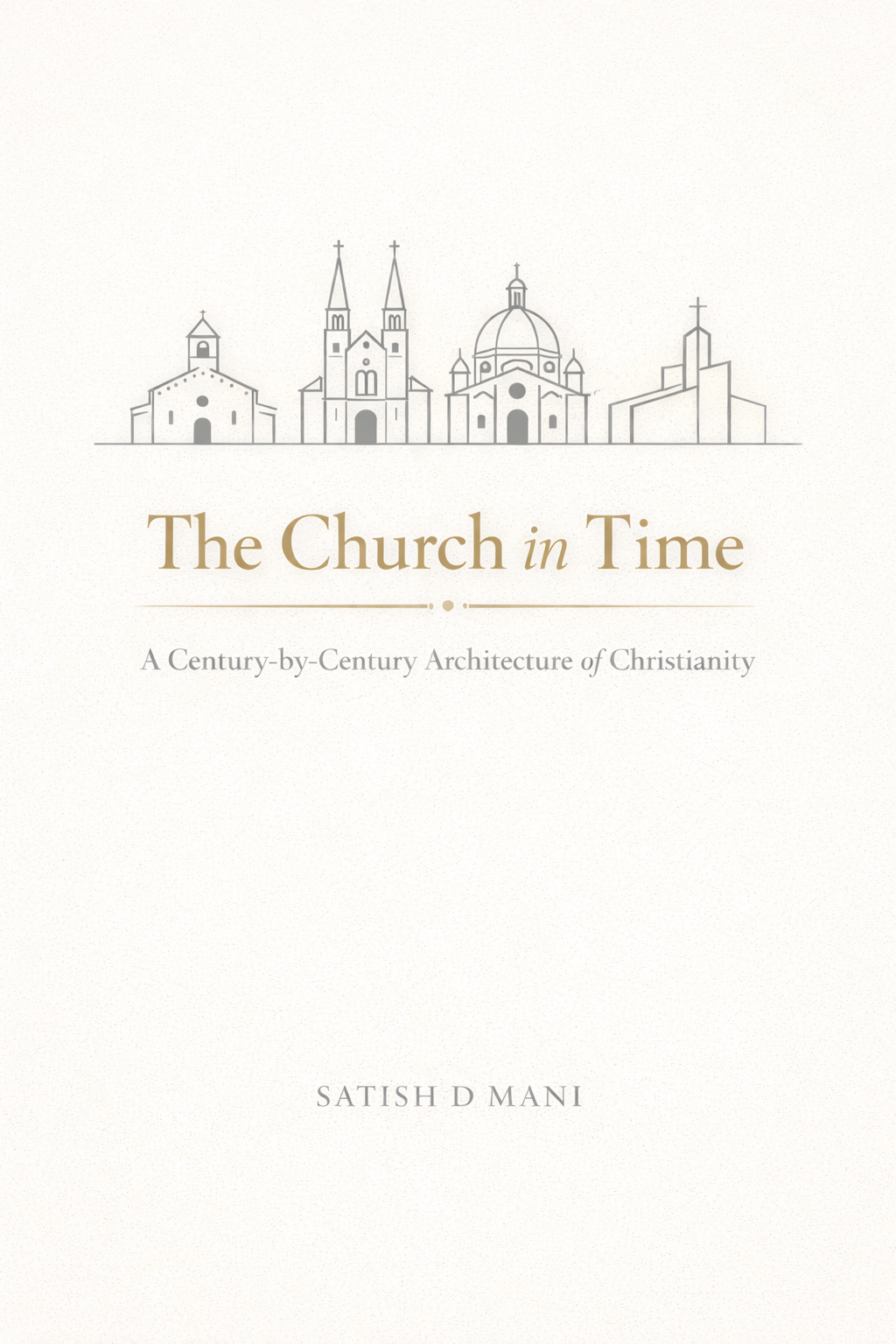
The Church in Time offers a disciplined, century-by-century exploration of Christian architecture from the 1st through the 11th centuries CE. Rather than imposing later stylistic labels, this volume follows the Church as it emerged, adapted, and institutionalized across changing political, cultural, and religious landscapes. Beginning with house churches and persecuted communities, it traces the gradual transition to public worship spaces, imperial patronage, regional variation, and the architectural foundations of Christendom. Each century is examined on its own terms, revealing how theology, liturgy, geography, and power shaped the built environment of Christian life. This approach highlights continuity and transformation without oversimplification. The Church in Time provides essential historical grounding for understanding later architectural developments, while restoring attention to the formative centuries when Christian space was still being invented. It is a work of architectural memory—careful, chronological, and foundational.
Chapters
-
1st Century CE – House churches
-
2nd Century CE – Dedicated worship spaces
-
3rd Century CE – Adapted basilica forms
-
4th Century CE – Imperial monumental churches
-
5th Century CE – Cruciform stone churches
-
6th Century CE – Domes and mosaics
-
7th Century CE – Regional hybrid forms
-
8th Century CE – Classical revival churches
-
9th Century CE – Expanded Romanesque planning
-
10th Century CE – Imperial vertical emphasis
-
11th Century CE – Mature Romanesque architecture
-
12th Century CE – Early Gothic light
-
13th Century CE – High Gothic cathedrals
-
14th Century CE – Late Gothic transition
-
15th Century CE – Renaissance proportion revival
-
16th Century CE – Baroque dramatic space
-
17th Century CE – Theatrical Baroque movement
-
18th Century CE – Rococo ornamental interiors
-
19th Century CE – Historicist revival styles
-
20th Century CE – Modern experimental forms