
Summary
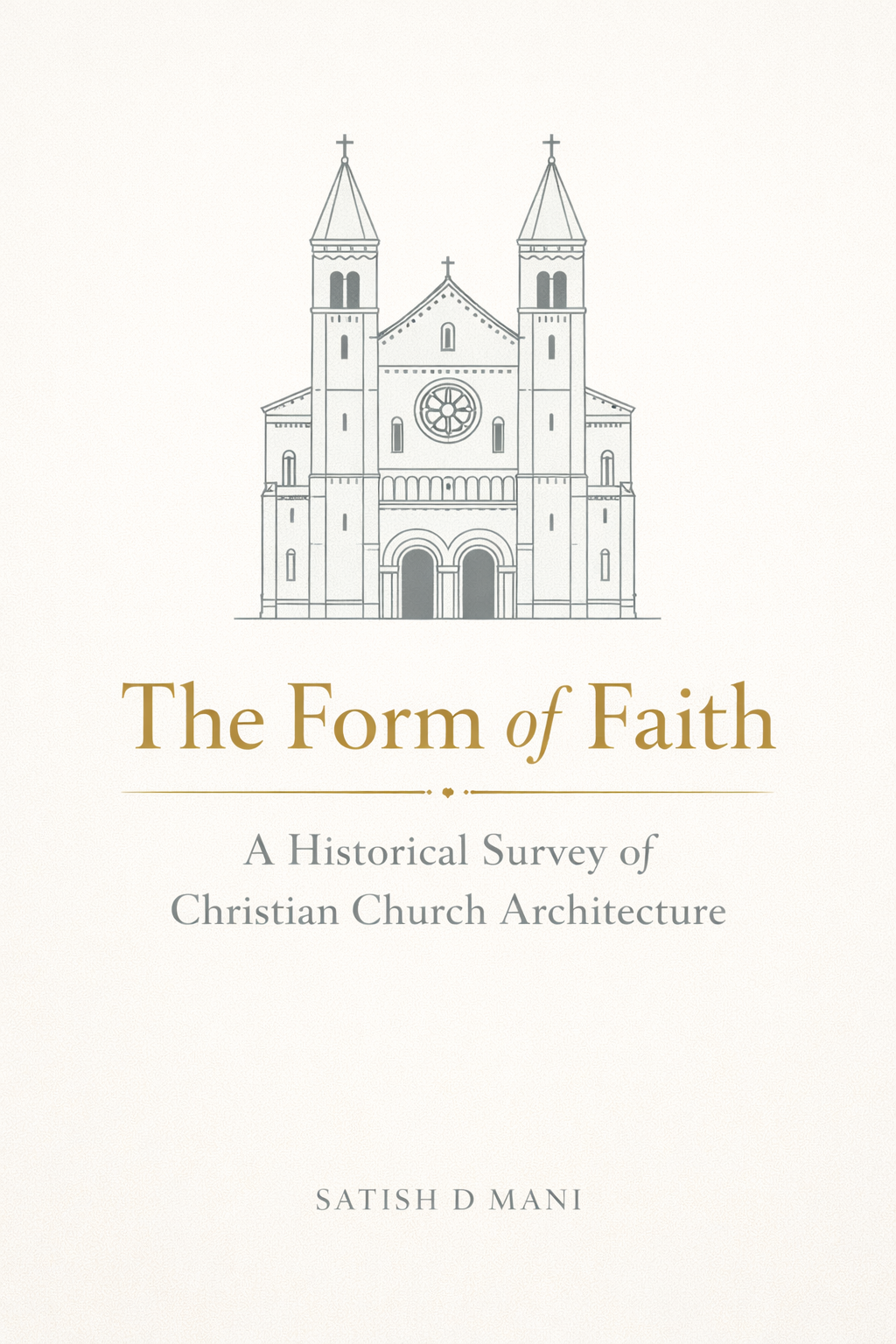
The Form of Faith traces the visible evolution of Christianity through its most enduring witness: its buildings. From the humble basilicas of the early Church to the bold experimentation of contemporary sanctuaries, this volume surveys how Christian belief has been expressed in stone, brick, light, and space across two millennia. Each architectural era—Byzantine, Romanesque, Gothic, Renaissance, Baroque, Neoclassical, Modernist, and Contemporary—is examined not merely as a style, but as a theological and cultural response to its time. The book shows how changing ideas of God, worship, authority, and community shaped the physical form of churches, and how architecture in turn shaped Christian experience. Written for students, architects, historians, and thoughtful readers alike, this volume provides a clear and structured foundation for understanding church architecture as a living tradition—one that continuously negotiates between reverence for the past and the demands of the present. The Form of Faith establishes architecture as theology made visible, and history as belief built to last.
Chapters
Chapter 1 – Introduction to Christian Church Architecture
Chapter 2 – Early Christian Church Architecture
Chapter 3 – Byzantine Church Architecture
Chapter 4 – Romanesque Church Architecture
Chapter 5 – Gothic Church Architecture
Chapter 6 – Renaissance Church Architecture
Chapter 7 – Baroque Church Architecture
Chapter 8 – Neoclassical Church Architecture
Chapter 9 – Modernist Church Architecture
Chapter 10 – Contemporary Church Architecture
Conclusion